
How Dehumidifiers Prevent Mold in Central New York Homes

How Dehumidifiers Prevent Mold in Central New York Homes

How Dehumidifiers Prevent Mold in Central New York Homes

How Dehumidifiers Prevent Mold in Central New York Homes

What Every Homeowner Should Know About Humidity, Mold Risk, and Indoor Air Quality

Moisture is the one thing mold can’t grow without. And in Central New York, where cold winters give way to humid summers and older homes are the norm, keeping indoor humidity under control is one of the most important things a homeowner can do to prevent mold.
Humidifiers and dehumidifiers both affect moisture levels in your home, but using them incorrectly can quietly create the conditions mold needs to thrive. Understanding the difference, knowing when to use each, and recognizing the warning signs can save you from a costly remediation down the road.
This guide covers everything Central New York homeowners need to know, starting with how mold grows and why humidity control is essential.

How Mold Grows, and Why Humidity Is the Key Factor

Mold spores exist naturally in the air around us. They’re not a problem on their own. The problem starts when those spores land on a damp surface and begin to grow.
The Environmental Protection Agency (EPA) recommends keeping indoor relative humidity between 30% and 50% to prevent mold. Once humidity climbs above that range, whether from steam, leaks, poor ventilation, or an overworked humidifier, mold can begin taking hold on common household materials, including:
  • Drywall and insulation
  • Wood framing and floor joists
  • Carpeting and furniture
  • Window frames and trim
  • HVAC ducts and air handlers
In a region like Central New York, where seasonal snowmelt, spring rain, and summer humidity all push moisture into homes, staying ahead of indoor humidity levels is a year-round concern.

Humidifiers vs. Dehumidifiers: Understanding the Difference

These devices do opposite things; using either at the wrong time worsens moisture problems.
Humidifiers add moisture to the air. They’re commonly used during dry winter months to relieve dry skin, reduce static electricity, and ease sinus discomfort. They’re appropriate when indoor humidity drops below 30%.
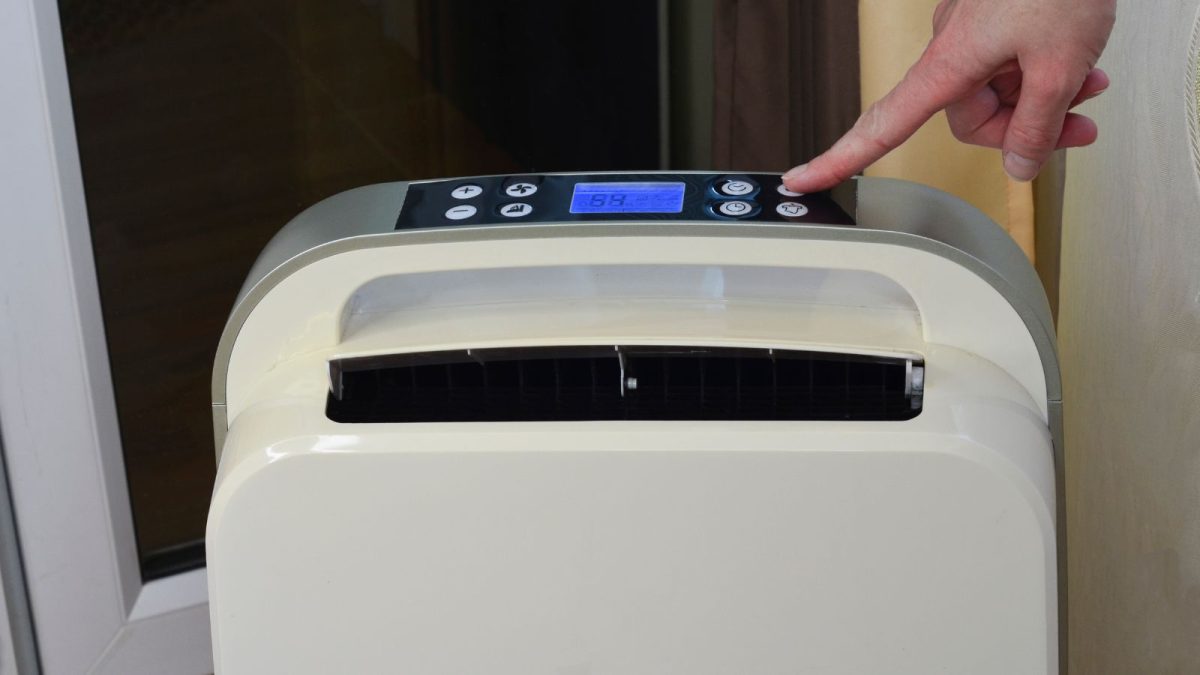
Dehumidifiers remove excess moisture from the air. They’re used in damp environments like basements, crawl spaces, bathrooms, and laundry rooms, especially during warm months or after water intrusion.
The risk comes when a humidifier runs in a space that’s already too humid, or when a dehumidifier is skipped in a basement that clearly needs one. Both scenarios can quietly create ideal conditions for mold growth.

Common Humidity Mistakes That Lead to Mold in Central NY Homes

In homes throughout the Syracuse area, we see the same patterns time and again. These are the most common humidity control mistakes that create mold problems:
 
Mistake: Running a humidifier 24/7
Why it Matters: Can push indoor humidity above 60%, fueling mold on walls, windows, and bedding
 
Mistake: No dehumidifier in the basement
Why it Matters: Moisture from foundation seepage and condensation builds up unchecked
 
Mistake: Skipping a hygrometer
Why it Matters: Without monitoring, you won’t know humidity has reached dangerous levels
 
Mistake: Blocking HVAC vents

Why it Matters: Restricts airflow, creates cold spots, and increases condensation — a recipe for mold

A simple digital hygrometer, available for $10–20 online or at most hardware stores, takes the guesswork out of humidity monitoring and can alert you before levels reach dangerous territory.

Ideal Indoor Humidity Levels for Mold Prevention
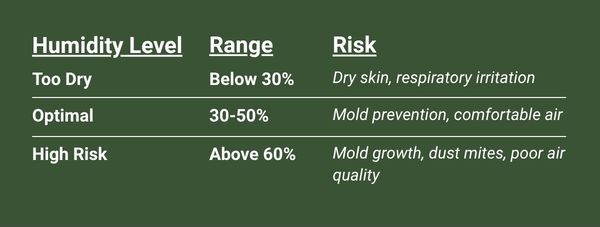
Knowing where your home’s humidity stands is the first step. Here’s a quick reference:
 
Humidity Level Range Risk Too Dry Below 30% Dry skin, respiratory irritation Optimal 30–50% Mold prevention, comfortable air High Risk Above 60% Mold growth, dust mites, poor air quality
Pay special attention to areas that naturally trap moisture: basements, bathrooms, laundry rooms, and crawl spaces. These spaces often exceed safe humidity levels even when the rest of the home seems fine.

Why Dehumidifiers Are Essential in Central New York Homes

Central New York homeowners face moisture threats in every season — spring snowmelt saturating the ground, humid summers pushing moisture through foundation walls, fall rainstorms, and winter condensation from ice dams and temperature fluctuations.
Basements are particularly vulnerable. Their below-grade location and naturally lower temperatures mean warm, humid air condenses easily on cold surfaces like pipes, walls, and floor joists. Without a dehumidifier to pull that moisture out, it accumulates invisibly until mold takes hold.
A properly sized basement dehumidifier can:
  • Remove excess moisture before it reaches mold-friendly levels
  • Prevent condensation on pipes, walls, and framing
  • Reduce musty odors that signal hidden moisture problems
  • Create an environment where mold simply cannot grow
Look for a model with an automatic humidistat so it runs only when needed, keeping humidity in the 30–50% range without over-drying the air.

Signs a Dehumidifier Isn’t Enough: When to Call a Professional

A dehumidifier helps prevent mold but can’t fix existing growth or the moisture source. If you still notice any of the following issues, have your home inspected:
  • Persistent musty or earthy odors, especially in basements or closets
  • Visible mold or discoloration on walls, ceilings, or floor joists
  • Peeling paint, bubbling drywall, or crumbling masonry
  • Condensation that keeps returning on windows, pipes, or walls
  • Allergy or asthma symptoms that worsen when you’re indoors
These are signs that moisture may already be trapped inside walls, flooring, or insulation, and that mold may be growing in places you can’t see.
At Green Tree Environmental, we use moisture meters and infrared imaging to find hidden water before it becomes a larger problem. If mold is present, we follow strict New York State Article 32 guidelines to safely remove it and prevent its return. We also offer basement waterproofing services to address the underlying causes of chronic moisture intrusion.

Protecting Your Central New York Home Year-Round

Moisture management isn’t a one-time fix; it’s an ongoing part of homeownership in Central New York. The good news is that a few simple habits go a long way:
  • Monitor indoor humidity with a hygrometer year-round
  • Run a dehumidifier in your basement during warm and rainy months
  • Make sure humidifiers don’t push humidity above 50% in any room
  • Keep gutters and downspouts clear to direct snowmelt and rain away from your foundation
  • Address any signs of water intrusion within the first 24–48 hours, if possible
If you’ve recently experienced flooding or significant water intrusion, read our guide on post-flood mold risks and what to watch for in the days after a flood. For homeowners dealing with recurring basement moisture, our overview of snowmelt and foundation risks explains why Central New York homes are especially vulnerable during the spring thaw.

Prevent Mold: Start with a Free Consultation

Green Tree Environmental is Central New York’s trusted expert in mold remediation, mold inspections, water damage restoration, and basement waterproofing. With more than 30 years of local experience and full compliance with New York State Article 32, we serve homeowners throughout Syracuse, Baldwinsville, Rome, Utica, Cortland, Camillus, Oswego, and surrounding communities.
Schedule Your FREE Consultation Today. The Sooner Moisture Is Addressed, the Easier It Is to Prevent Long-Term Damage.

FAQs: Dehumidifiers and Mold Prevention in Central NY

Q: Can a dehumidifier stop mold from growing?

A: A dehumidifier reduces indoor humidity to levels where mold cannot thrive. For best results, keep indoor humidity between 30–50% year-round. However, if mold is already present, a dehumidifier won’t remove it. You’ll need professional remediation to address existing growth.

Q: Should I run a dehumidifier in my basement year-round in Central New York?

A: In most Central New York homes, the answer is yes, especially in basements and crawl spaces. Even during winter, temperature differences between your basement and heated living areas can cause condensation. Running a dehumidifier year-round in these spaces is one of the most effective ways to prevent hidden mold growth.

Q: Can my humidifier be causing mold?

A: Yes, especially if it’s running in an already humid space or being used without a hygrometer to monitor humidity levels. If indoor humidity climbs above 50–60%, mold can begin growing on walls, window frames, and bedding. Always track humidity when using a humidifier, and turn it off if levels climb too high.

Q: How do I know if my dehumidifier is actually working?

A: Check that the unit is regularly collecting water, and use a hygrometer to confirm that humidity stays in the 30–50% range. You should also notice fewer musty odors and less condensation on windows and pipes over time. If you’re still seeing moisture issues despite running a dehumidifier, contact a professional — there may be an underlying water intrusion problem.

Q: When should I call a mold remediation company instead of just using a dehumidifier?

A: Call a professional if you notice visible mold, persistent musty odors, peeling or bubbling paint, or if allergy symptoms worsen indoors. These are signs that mold may already be established in hidden areas — behind walls, under flooring, or inside insulation — where a dehumidifier alone won’t reach it. Green Tree Environmental serves homeowners throughout Syracuse, Utica, Cortland, Oswego, and surrounding communities.

Testimonials

Responsive, Professional, Great Job

“I’m a property owner and have used Green Tree Environmental on both commercial and residential properties. Scott was very responsive to our urgent needs. He returned my call immediately after normal hours and was on site with dryers, water vacuum cleaner, etc. when a waterline broke and flooded our building.I have also had a mold issue in 2 houses that his company remediated. They were professional, did a great job. I will definitely use their services in the future.”

Matthew Bobbett

Quick, Knowledgeable, Highly Recommended!

“Our basement flooded due to a failed sump pump. We had waterlogged carpets, ruined possessions, and a seemingly endless amount of water. Although Scott was doing work for other customers, he came out right away and set up several fans, dehumidifiers and air scrubbers that completely dried up the basement and prevented any water damage/mold from formulating on the drywall or any other spots. He also communicated with our insurance company on our behalf saving us time. We can’t say enough good things about Scott and Green Tree Environmental.”

Marissa Rothschild

Expertise, Responsiveness, Two Thumbs Up!!

“The two adjectives that come to mind for this company are expertise and responsiveness. Having a water backup issue in my cellar, I contacted the company and spoke with Scott, a very knowledgeable and personable guy. He immediately brought out machines to start drying things out and explained his next steps in the process. He kept me well informed throughout, which I really appreciated. He did an excellent job for me. Two thumbs up!”

Kate T.

Fabulous Job

From estimate to remediation to clearance, Scott did a fabulous job!

Kim Murphy

Professional, Personable, Highly Recommended!

We found mold in our mudroom and started contacting companies. Scott with Green Tree Environmental answered immediately and gave very helpful information over the phone and came to our home to complete the mold removal process within a very reasonable time frame. Scott is very kind, professional, has immense knowledge of his trade and made us feel at ease. His pricing is very reasonable especially for the amount of time and care he gives to his clients. We could not recommend Green Tree Environmental more and will for sure use them for any future needs.”

Katie Maul

Very Responsive, Quality Work

“Green Tree Environmental did a great job removing mold from our attic. Owner Scott was very professional and personable. Very responsive to our needs. Quality work at a reasonable cost. Highly recommend!”

Marty Pikarsky
Business Owner

Green Tree Environmental

Two Locations!

115 N. Geddes St. Suite #1
Syracuse, NY 13204

356 Paradise Road
Central Square, NY 13036

scott@greentreeenvironmentalllc.com

(315) 447-8647

Service Areas include: Baldwinsville, Camillus, Canastota, Clay, East Syracuse, Elbridge, Fayetteville, Jamesville, Liverpool, Manlius, North Syracuse, Onondaga, Skaneateles, Syracuse & more.