
Mold in Insulation: What Central NY Homeowners Should Know
Mold in Insulation: What Central NY Homeowners Should Know
How Central NY Homeowners Can Spot, Assess, and Safely Remove Moldy Insulation
Insulation does its job quietly. It sits in your walls, attic, and basement rim joists keeping heat in, and most homeowners never think about it again.
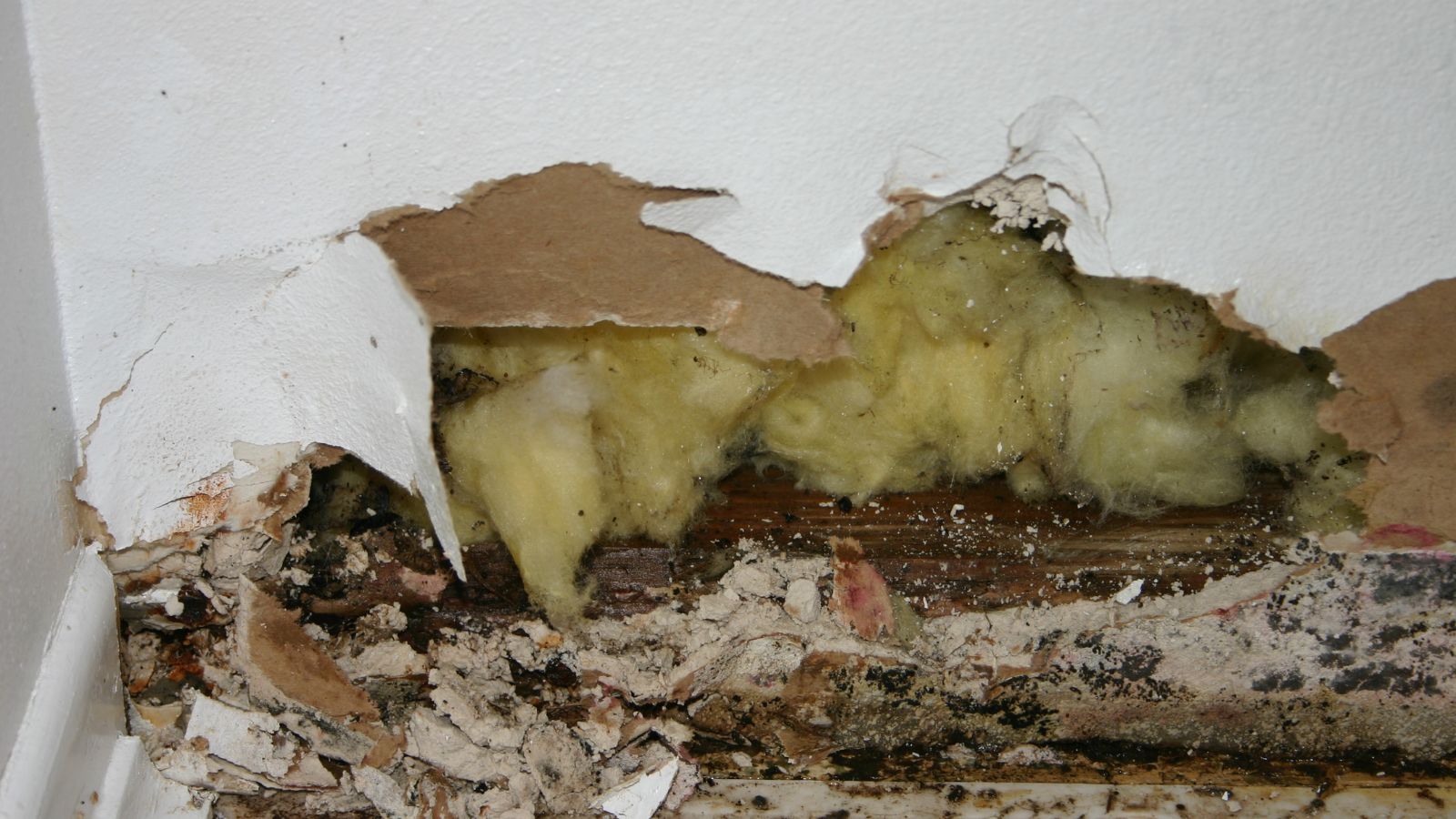
That is exactly why mold in insulation is so easy to miss. When insulation gets wet and stays wet, mold can take hold where no one is looking, and by the time a musty smell or ceiling stain shows up, the problem has usually been growing for weeks.
Central New York is hard on insulation. Ice dams, spring snowmelt, humid summers, and the winter temperature gap between a heated house and a frozen attic all push moisture toward it. In homes from Syracuse to Utica, wet insulation is one of the most common hidden sources of mold we find.
How Insulation Gets Wet in Central NY Homes
Mold needs moisture, something to feed on, and still air. Insulated spaces like closed wall cavities, attics, and rim joists have all three. The moisture usually comes from a roof leak or ice dam dripping into attic insulation, a slow plumbing leak inside a wall, or basement water wicking up into rim joist and wall insulation.
The source homeowners overlook most is condensation. On cold winter nights, warm, humid air from your living space slips through gaps around light fixtures, outlets, and attic hatches. When it reaches the cold side of the insulation, it turns to water—no leak required.
Mold can begin growing within 24 to 48 hours, and insulation inside a closed wall barely dries on its own.
Which Types of Insulation Are Most Likely to Grow Mold?
Most insulation is not mold food by itself. The problem is what it traps: dust, paper facing, and the wood framing it holds water against. Here is how common insulation types in CNY homes hold up after water exposure.
Fiberglass batts are the most common insulation in CNY walls, attic floors, and rim joists. The glass itself doesn’t feed mold, but trapped dust and paper facing do, and wet batts hold water against framing. If they were briefly wet with clean water, they can sometimes be saved by fully drying them.
Cellulose is the blown-in insulation found in many attics and older wall retrofits. It’s treated to slow mold, but once soaked, it clumps, packs down, and dries very slowly. Wet cellulose is usually removed.
Open-cell spray foam absorbs water and can hide wet wood behind it. Wet sections are cut out and replaced.
Closed-cell spray foam and rigid foam board resist moisture themselves, but water trapped behind them can rot framing unseen. The foam often stays; what’s behind it needs checking.
Mineral wool is water-repellent, doesn’t feed mold, and dries better than most. It can often be saved after exposure to clean water.
The water source matters as much as the material.
Insulation soaked by floodwater or a sewage backup should always be removed, no matter what type it is.
Signs of Mold in Your Walls and Attic Insulation
You usually can’t see insulation without opening a wall or climbing into the attic, so watch for these indirect clues:
- A musty odor concentrated in one room, closet, or along an exterior wall
- Water stains on ceilings below the attic or on walls under windows
- A room that suddenly feels colder or draftier, a sign insulation has compacted from moisture
- Heating bills climbing with no other explanation
- Attic insulation that looks flattened, matted, or darker in patches
- Allergy or asthma symptoms that ease when you leave the house
Can Wet Insulation Be Dried Out or Saved?
Sometimes. A small, clean-water leak into open attic insulation, caught and dried within a day or two, may not require replacement. But most situations are less forgiving.
Insulation inside a closed wall cavity rarely dries before mold starts. Even when it does dry, compressed fiberglass and clumped cellulose lose much of their insulating value, so you pay for the damage every month on your heating bill.
A practical rule: if insulation has been wet longer than 48 hours, came into contact with dirty water, or shows staining or odor, plan on removing it. Moisture meters and thermal imaging show how far the water traveled, so removal stays limited to what truly needs to go. Our water damage restoration services can dry the structure quickly after a leak to give salvageable materials the best chance.
Moldy Insulation Removal in Syracuse and Central NY
Pulling out moldy batts or vacuuming wet cellulose yourself can release spores and debris throughout your home. Safe removal requires containment, HEPA air filtration, and protective equipment. New York’s Article 32 mold law also requires projects larger than 10 square feet to be handled by licensed professionals, with assessment and remediation performed separately.
When we remediate moldy insulation, we contain the work area, remove and bag contaminated material, HEPA-clean and treat the exposed framing and sheathing, and confirm everything is dry before the space is closed back up. Just as important, the moisture source has to be fixed first. New insulation over an unrepaired leak or an unsealed attic bypass will be wet again by spring. Learn more about our attic mold removal and mold remediation after water damage services, or read our guide to mold in attics for ventilation and ice dam prevention tips.
Protect Your Home From Hidden Insulation Mold
Moldy insulation rarely fixes itself, and catching it early keeps remediation smaller. Green Tree Environmental has more than 30 years of experience and full New York State Article 32 compliance. We serve homeowners in Syracuse, Baldwinsville, Camillus, Cortland, Oswego, Rome, Utica, and surrounding communities.
FAQs: Mold in Insulation
Q: Can mold grow in insulation?
A: Yes. Fiberglass itself does not feed mold, but the dust, paper facing, and wood framing around it do, and wet insulation holds moisture against those surfaces.
Q: How do I know if my insulation has mold?
A: Watch for a musty odor near an exterior wall or ceiling, water stains on drywall, and rooms that suddenly feel colder. Because insulation is hidden, a professional moisture assessment is the most reliable way to confirm it.
Q: Can wet insulation be dried out, or does it need to be replaced?
A: Insulation exposed to a small, clean-water leak and dried within 24 to 48 hours can sometimes be saved. Insulation that stayed wet longer, sits inside a closed wall, shows staining or odor, or was soaked by floodwater or a sewage backup should be removed and replaced.
Q: Is moldy insulation dangerous?
A: It can be. Mold spores and fragments from contaminated insulation can travel into living spaces and trigger allergy and asthma symptoms.
Q: What type of insulation is most resistant to mold?
A: Closed-cell spray foam, rigid foam board, and mineral wool resist moisture better than fiberglass batts or cellulose. Water trapped behind foam can still damage the framing, so fixing the moisture source matters more than the material.
Testimonials
Very Responsive, Quality Work
“Green Tree Environmental did a great job removing mold from our attic. Owner Scott was very professional and personable. Very responsive to our needs. Quality work at a reasonable cost. Highly recommend!”
Quick, Knowledgeable, Highly Recommended!
“Our basement flooded due to a failed sump pump. We had waterlogged carpets, ruined possessions, and a seemingly endless amount of water. Although Scott was doing work for other customers, he came out right away and set up several fans, dehumidifiers and air scrubbers that completely dried up the basement and prevented any water damage/mold from formulating on the drywall or any other spots. He also communicated with our insurance company on our behalf saving us time. We can’t say enough good things about Scott and Green Tree Environmental.”
Expertise, Responsiveness, Two Thumbs Up!!
“The two adjectives that come to mind for this company are expertise and responsiveness. Having a water backup issue in my cellar, I contacted the company and spoke with Scott, a very knowledgeable and personable guy. He immediately brought out machines to start drying things out and explained his next steps in the process. He kept me well informed throughout, which I really appreciated. He did an excellent job for me. Two thumbs up!”
Professional, Personable, Highly Recommended!
“We found mold in our mudroom and started contacting companies. Scott with Green Tree Environmental answered immediately and gave very helpful information over the phone and came to our home to complete the mold removal process within a very reasonable time frame. Scott is very kind, professional, has immense knowledge of his trade and made us feel at ease. His pricing is very reasonable especially for the amount of time and care he gives to his clients. We could not recommend Green Tree Environmental more and will for sure use them for any future needs.”
Highly Recommended!
“Scott and his crew with Green Tree made time for us when our home sold last minute and we needed to close to move to Colorado. What he believed might take 7-10 days they were able to do in 5 and it passed inspection immediately. Highly Recommended!”
Fabulous Job
From estimate to remediation to clearance, Scott did a fabulous job!
Outstanding Work
“I truly appreciate the outstanding work you did in my house, which was approved by the appraiser and allowed me to finalize the purchase! My forever-home will always remind me of a great professional and kind person whose fantastic contribution made my dream come true. Thank you!”
Responsive, Professional, Great Job
“I’m a property owner and have used Green Tree Environmental on both commercial and residential properties. Scott was very responsive to our urgent needs. He returned my call immediately after normal hours and was on site with dryers, water vacuum cleaner, etc. when a waterline broke and flooded our building.I have also had a mold issue in 2 houses that his company remediated. They were professional, did a great job. I will definitely use their services in the future.”
Green Tree Environmental
Two Locations!
115 N. Geddes St. Suite #1
Syracuse, NY 13204
356 Paradise Road
Central Square, NY 13036
scott@greentreeenvironmentalllc.com
(315) 447-8647
Service Areas include: Baldwinsville, Camillus, Canastota, Clay, East Syracuse, Elbridge, Fayetteville, Jamesville, Liverpool, Manlius, North Syracuse, Onondaga, Skaneateles, Syracuse & more.